

Customer story: Gakkiya BOW
It's a handy toolthat lets you check on repairseasily, from any device.
Fujisawa, Kanagawa, JapanGakkiya BOW
Music shopSince July 2026Switched from paper slips
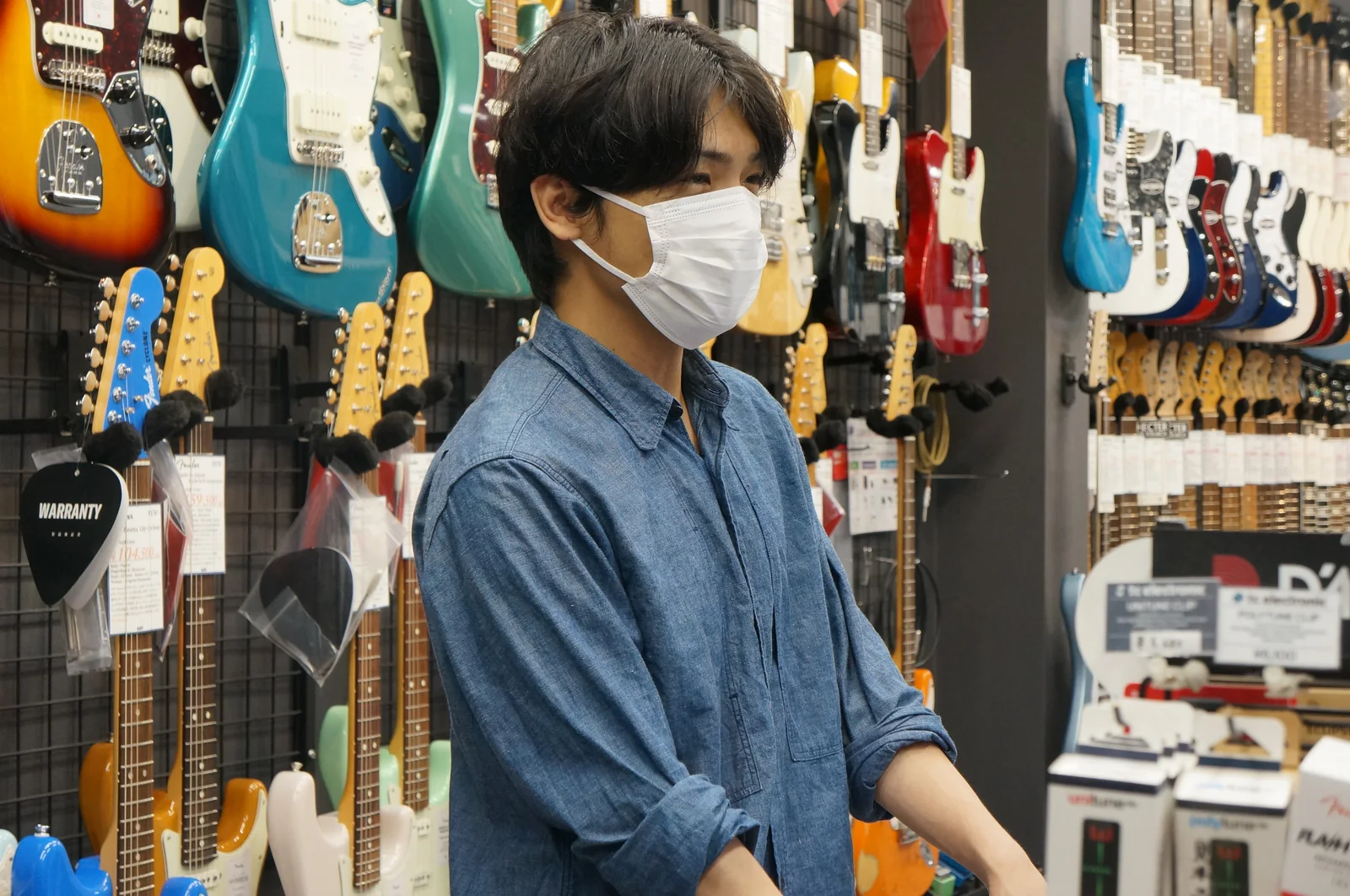
From an interview with staff at Gakkiya BOW in September 2026, translated from Japanese. Spoken words were lightly edited for readability; the meaning is unchanged.
About Gakkiya BOW
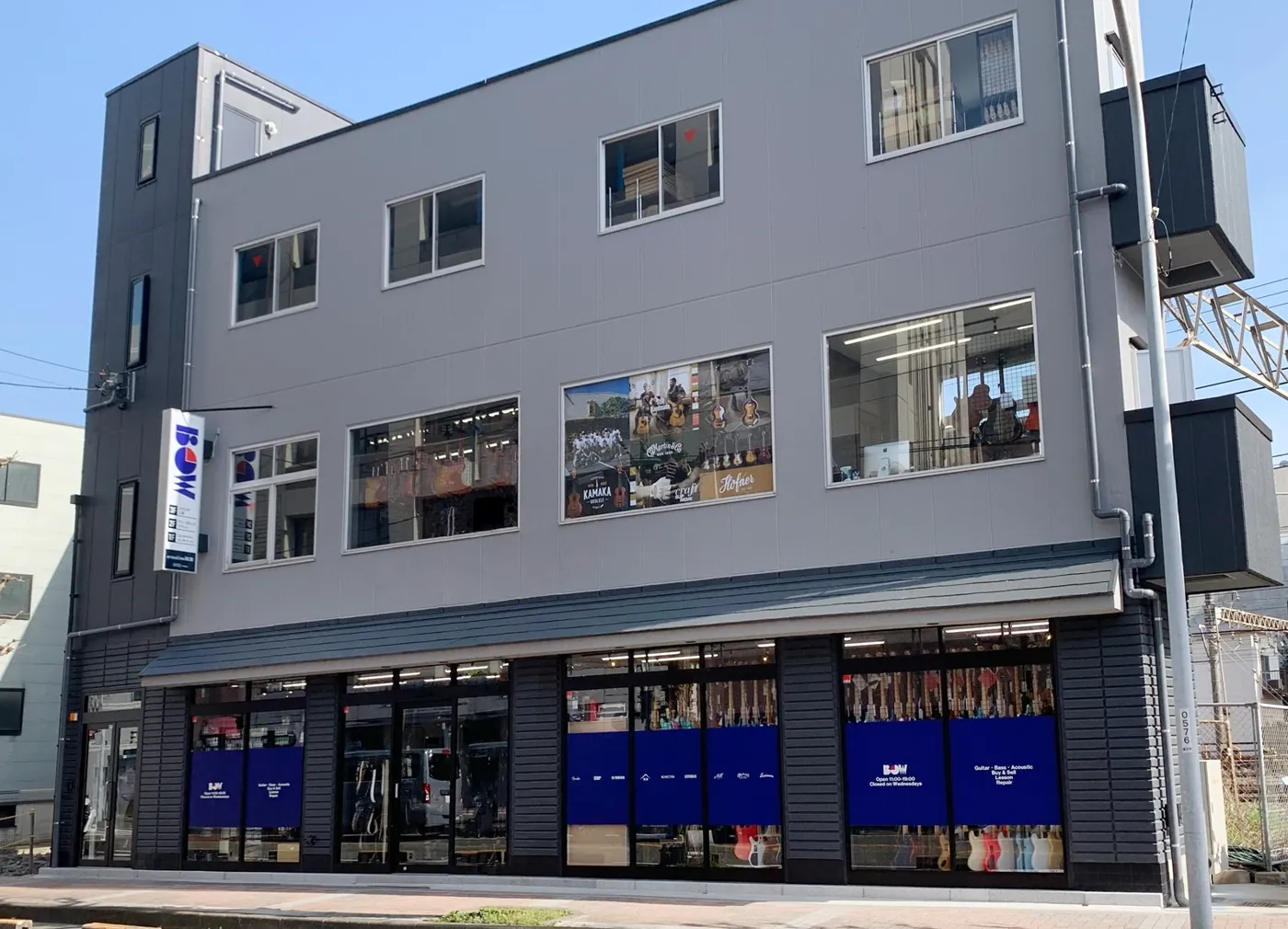
Gakkiya BOW is a music shop in Fujisawa, Kanagawa, Japan. It takes in guitar and bass repairs over the counter, and the repair work happens on two floors: the 1st and the 3rd.
In July 2026 the shop moved its repair intake from paper slips to Repair Karte. Intake, estimates, customer updates and checkout at the register now all run through it.
A note for shops outside Japan: BOW sends customer updates through LINE, the messaging app most people in Japan use, and checks out on AirREGI, a Japanese POS app. Outside Japan, Repair Karte sends the same updates by email.
What changed
- Even with repairs split between the 1st and 3rd floors, keeping track of slips got easier.
- Thanks to LINE, we call customers a lot less than before.
- Repairs move faster, from intake to pickup.
01
From paper slipsto the iPad by the register
The tool for intake changed from paper slips to an iPad and a computer. We asked the staff about intake, then and now.
Before Repair Karte, how did you take in repairs?
We took them in on paper slips. As you write each item down, you run out of space, so the slips get hard to read. And because it's paper, someone has to go out and buy more. We also called customers by phone, which meant phone bills.
How do you take in repairs now?
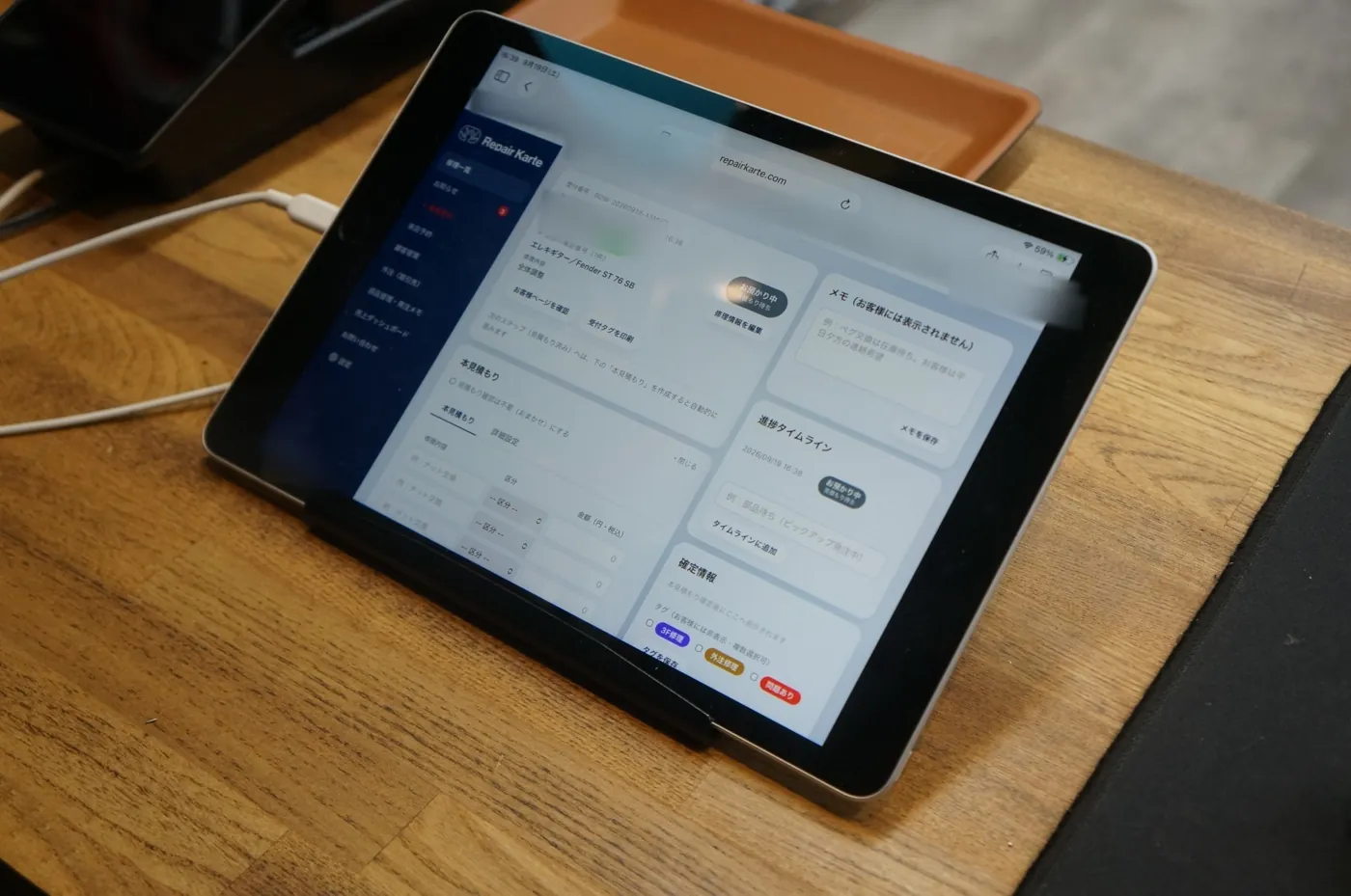
On a computer or the iPad next to the register. We enter the customer's details and the instrument's details and create the intake slip.
02
The 1st and 3rd floors,each on their own phone
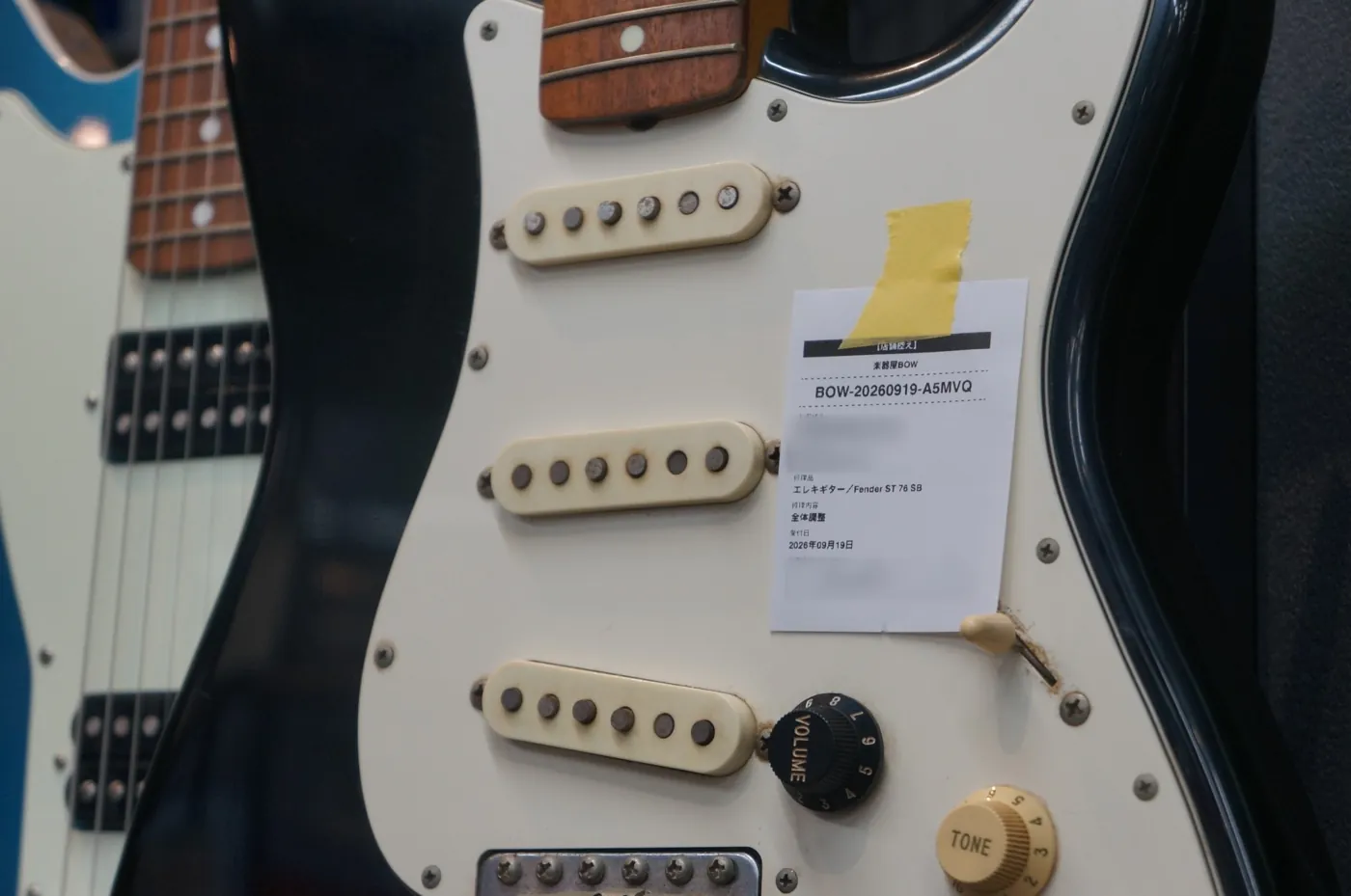
BOW's repair work is split between the 1st and 3rd floors. Every item wears a check-in tag printed with its intake number, so whichever floor it's on, the number pulls up its record.
How do the 1st and 3rd floors keep each other up to date?
The repair techs on the 3rd floor look things up on their own phones, since it's digital now instead of paper slips. It's easy to work together, and I feel things run more smoothly for everyone.
Who sends estimates and completion notices, and how?
Whoever handled the repair enters it from their own device. If something changes, they change it, and the moment it's updated, everyone sees it.
03
Customers checkon their repair in LINE
When an estimate is entered and marked “Estimated”, customers who've connected LINE get it right away and can approve it with a tap. Customers who don't use LINE get it by email, and outside Japan, every customer gets it by email.
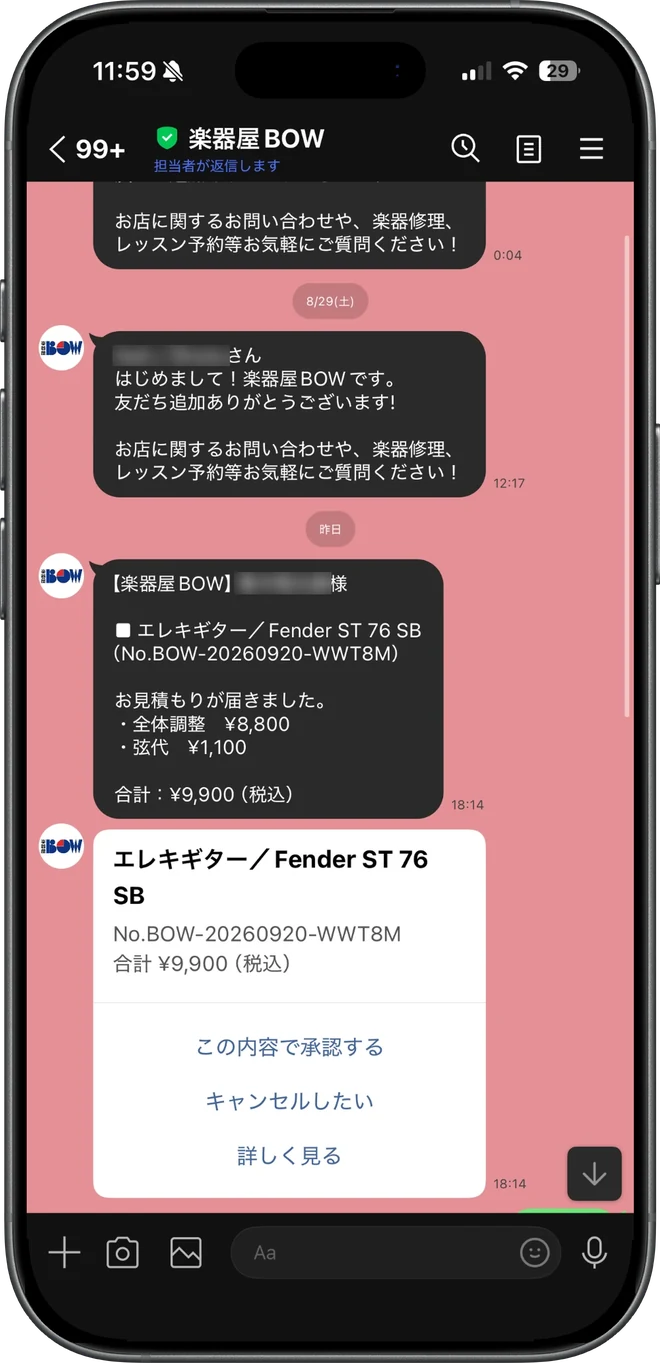
When someone asks “How's my repair going?”, how do you check?
Customers who've connected LINE can look for themselves, because what we enter in Repair Karte shows up on their side too. If they haven't connected, we can find the record right away and tell them.
04
Work that's gone,and a worry that stays
We also asked what changed in the daily work, and what still bothers them.
Since you started, is there work you no longer do, or new work you've taken on?
We no longer stamp the company seal on paper slips. There isn't much new work. We print the slip on receipt paper to hand to the customer, so I'd say printing is the one thing that's been added.
Is there anything that bothers you about using it?
Because everything is digital, there's a fear that if the server goes down or the internet stops, we can't use it, and that's hard to shake. However well you've prepared, a worry is still a worry.
Be ready for “what if the internet goes down”
The worry BOW's staff mentioned was not being able to use it if the server or the internet goes down. We can't promise that worry goes away. But every item carries a check-in tag printed with its intake number, item, repair details and date, so even when the screen isn't available, the paper tells you which item is which repair. Data is backed up automatically once a day, 30 days are kept, and you can download a copy to your own computer too.
Gakkiya BOW's repairs in numbers
We counted the repairs recorded in BOW's Repair Karte as of early September 2026.
Repairs on record
92repairs
As of early September 2026
Most common job
Full setup30 repairs
30 of the 92 repairs had “full setup” on the first line of the job field.
Customers connected on LINE
45customers
As of August 29, 2026. These customers get estimates and completion notices in LINE.
Each figure is a count at one point in time. None of them compares before and after, so we don't say anything went up or down.
How a repair moves through Gakkiya BOW
Intake
At the counter, staff enter the customer's name and phone number, the item and the symptoms into a record. The intake number is assigned automatically, and a check-in tag is printed and attached to the item. Whether it's on the 1st or the 3rd floor, the intake number pulls it up.
To do this in your shop
BOW keeps its own tags, such as “3F repair”, in the record's tag field. You create tags under Settings > Repair tags, with a name and a color. They show up as markers in the repair list and work as filters, and customers never see them. Besides shops on several floors, they're handy for marking repairs you've sent out.
More about intake records →Estimate
Staff enter the estimate and mark it “Estimated”. Customers connected on LINE get it right away and approve it on their phone; customers who don't use LINE get it by email.
To do this in your shop
Customers sign up by scanning the QR code printed on their copy of the check-in tag. At BOW that connects them to the shop's LINE; outside Japan and Taiwan, customers enter their email address instead. Estimates and completion notices then reach them automatically. (Customer updates are on the Standard plan and up.)
More about email updates →Work and completion
When the work is done and marked “Work done”, the completion notice goes out automatically. From that message, customers can also book a time to pick up.
Pickup and checkout
Staff scan the barcode on the completion slip with AirREGI to check out, with no amounts to key in. After pickup, a review request goes out automatically.
To do this in your shop
Scan the barcode printed on the completion slip at your register and the amount is entered for you. The checkout barcode is a Pro plan feature, available to shops in Japan and Taiwan.
Shop info
Gakkiya BOW
- Location
- Fujisawa, Kanagawa, Japan
- Type of shop
- Music shop (guitar and bass repairs taken in over the counter)
- Using Repair Karte since
- July 2026
- Before
- Paper repair slips
- Features in use
- Intake records, printed check-in tags, LINE updates (estimate approval and completion notices), email updates, customer records and repair history, POS barcode (AirREGI), sales dashboard, review requests, pickup appointments
- Not used yet
- Parts order notes
Gakkiya BOW website (in Japanese)
They haven't started using parts order notes yet. Nearly every other feature is part of their daily intake. BOW hasn't measured things like “X% fewer calls” or “Y hours saved”, so we don't publish numbers like that.
Bring Repair Karte to your shop.
The Free plan covers up to 100 repairs a month, with no credit card needed.